Showing posts with label tamron 90mm. Show all posts

Tuesday, December 23, 2008

Bokeh play: Wild Flowers


Bokeh: Wild Flowers
f/8, 1/320s, Tamron 1:1 90mm macro lens, Nikon D80

This must have been one of the longest hiatus I've taken. Not that I've been keeping away from taking photographs, but I'm just been not having time to update this photo blog. It's important to me, but it's not on the top of my list of a gazillion of things to do.

This photo is taken from a large collection of photos from the Sydney Royal Botanical Gardens. I'll try and put some of the nicer photos from that collection on this blog soon :)

This is currently my desktop background - I love the bokeh on this photo - the blurred flowers in the background. The colors were deliberately vivid - I wanted some bright spots of colors to contrast the usually drabby skies this time of the year.

You get best bokeh when you use a wider aperture - basically, you get very shallow Depth of Field. I used f/8, hardly the smallest aperture (this lens is capable of f/2.8), but that's because I wanted to get a balance of vivid colors and bokeh. The shallower your DOF, the less vivid your colors usually turn out to be.

Hope you all enjoy it ! Happy New Year !! Here's to a year of good photography !

Saturday, June 7, 2008

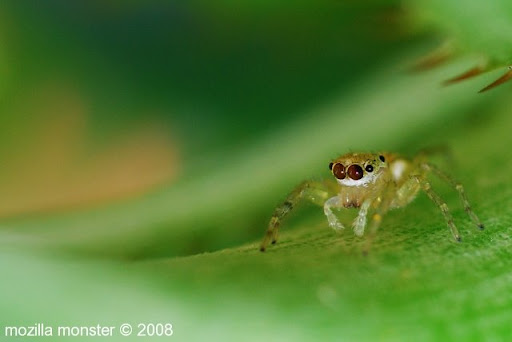
Macro: To stalk a spider !


1 | 2 | 3


Stalking a Spider

f/11, 1/60s, Off Camera i-TTL Fill Flash, Tamron 1:1 90mm macro lens, Nikon D80


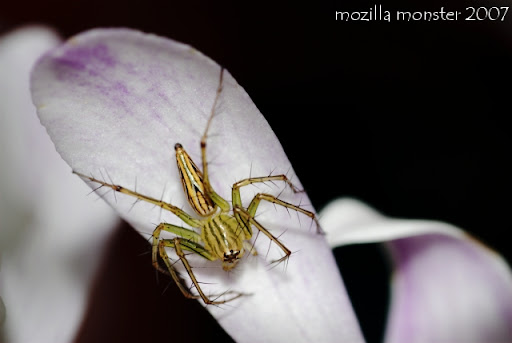
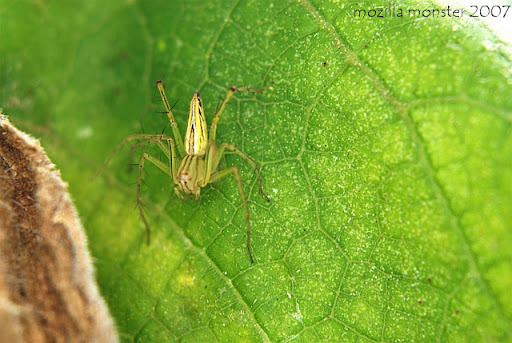
I know I haven't been updating for a while - my bad. So, this week, here's a series of photo of me stalking a spider in my garden.

Spiders can be quite hard to photograph, requiring plenty of patience. Basically, you have to be prepared to wait, and be really patient. You can help it a little by either photographing them in the morning when they are less active, or by using a strong flash to stun them a little.

It's really important when photographing little insects to make sure the eyes are sharp and in focus. Other parts of the insect can be a little out of focus - the depth of field is hard to control at macro levels - but the eyes must always be sharp.

Saturday, February 23, 2008

How to: Water Droplets


1 | 2 | 3 | 4 | 5 | 6 | 7 | 8


The making of: Water Droplets


First of all, I'd like to thank all the readers who have commented on the water droplet blog post. Your comments is a constant source of encouragement to me.

You've seen the water droplets photos, and suddenly feel like you want to give it a try. Besides a lot of time and patience, you also need to get the basic setup right.

Today, I'll show a bit on how it's done. Make sure you get some towels and tissues - it can get quite wet. And if you don't have a DSLR or prosumer click and shoot with decent manual control, this is not for you too. A macro lens will be good too.

Comments and more ideas on how this can be done is welcome. I'll also like to hear if you like (or dislike) my new photoblog layout and presentation.

Saturday, February 16, 2008

Macro: Water Droplets


1 | 2 | 3 | 4 | 5 | 6 | 7


Splash

f/8, 1/200s, Off Camera i-TTL Fill Flash, Tamron 1:1 90mm macro lens, Nikon D80


This time around, I've been toying with water droplets. It's one of the harder things to photograph, requiring a lot of luck and even more patience. Out of around 1000 attempts, I bring you a few that I like. Most are rejected outright, and many just aren't attractive enough.

Again, this being an experimental layout, I'd love for any comments not just on the photos itself, but also the layout. Do let me know how I can improve you experience while you're reading my humble photoblog. Thanks in advance !

Sunday, February 10, 2008

Macro: My Crystal Collection


1 | 2 | 3 | 4 | 5 | 6 | 7 | 8 | 9 | 10 | 11 | 12 | 13


Smoky Quartz with Rutile Inclusion

f/25, 1/60s, Off Camera i-TTL Fill Flash, Tamron 1:1 90mm macro lens, Nikon D80


Welcome to my small collection of photos depicting some of the crystals and minerals I have collected over the years. Due to some issues with Javascript coding between Firefox and MS IE browsers, Firefox readers will keep seeing this text over and over again. Click on '1' to start the gallery going, I've included explanations on each of the crystals depicted in the photographs you'll be seeing.

This being an experimental layout, I'd love for any comments not just on the photos or the crystal, but also the layout. Do let me know how I can improve you experience while you're reading my humble photoblog.

Sunday, February 3, 2008

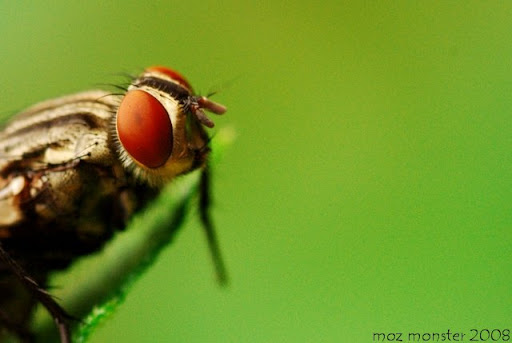
Macro: Stories from a fly


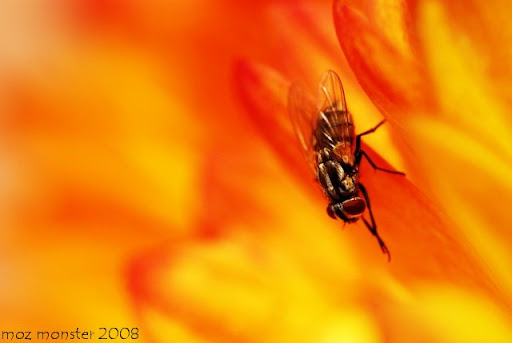
Orange is my world
f/16, 1/125 s, i-TTL Fill Flash, Tamron 1:1 90mm macro lens, Nikon D80


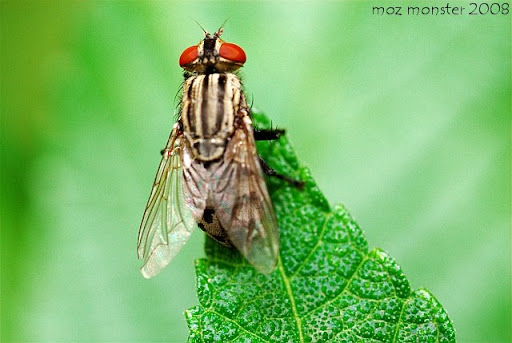
Top Fly
f/16, 1/125 s, i-TTL Fill Flash, Tamron 1:1 90mm macro lens, Nikon D80


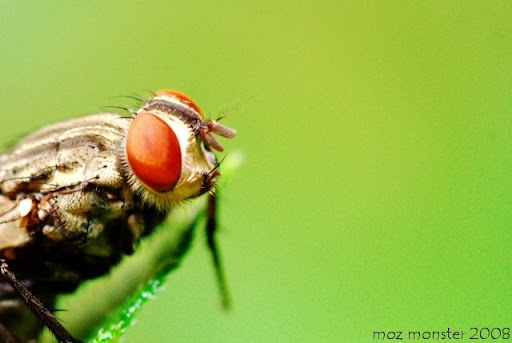
Bug's Eye 1
f/16, 1/125 s, i-TTL Fill Flash, Tamron 1:1 90mm macro lens, Nikon D80


Bug's Eye 2
f/16, 1/125 s, Tamron 1:1 90mm macro lens, Nikon D80

It's been a while since I last posted any bug photos, so I thought this would be a good time to put one up. The truth is, I haven't been bug chasing as actively as I have previously, and I've been quite happy to do more landscapes.

However, I had the chance to photograph one of the harder insects to shoot, the housefly. Extremely sensitive to movements, and ultimately finicky, it doesn't take much for a fly to, well, fly off. And once they're gone, they're not like dragonflies which has a tendency to return to its original spot. They just move on !

One trick I've been told to keep them still is to spray a fine mist of water at them to fool them into thinking it's raining. I haven't tried it yet, but I'm not sure about it - if there's rain coming, I'm sheltering !

The first picture, Orange is my World, is a favorite. Taken against a new pot of daisy my dad just bought home, the fly appears to be from another planet with all the hot orange background against it. In a technical sense, this was a bit of a challenge as well for a couple of reasons. The amount of blurred background had to be just right - if I showed too much details from the flower, I think the effect wouldn't be the same. This meant I had to make sure my f/ stop wasn't too narrow. But that in turn created another problem - the fly's a very dark color, I had to meter correctly to ensure I didn't create blown highlights by metering solely on the fly itself.

The next photo, Top Fly demonstrates a common problem with macro. I'm actually using a macro lens, and I was photographing the fly at 1 time magnification. What that means is the why actually in actual size on my camera's sensors. High magnification problem creates what is known is a shallow depth of field (DOF), which really means only a small area of the photo is in focus. Notice how some part of the abdomen and the right wing is not in focus. Try as hard as I could, and I'm still left with some area out of focus. There are was to counter this, we'll get to that in another post.

The 3rd and 4th photos, Bug's Eye 1 and Bug's Eye 2, is to demonstrate the difference when photographing with and without flash. Bug's Eye 1 was photographed with an external flash, the Nikon SB-600. The flash was diffused with a flash cap to create better lighting conditions. Notice how much more details appear when external flash is used. Also, the photo with flash appears to have less noise. All other settings are the same. Goes to show how important external diffused flash is when doing macro photography.


Monday, December 31, 2007

Series: Butterfly Park, KL


First, I'm A Caterpillar
f/11, 1/100s, ISO 800, TTL Fill Flash, Tamron 1:1 90mm Macro Lens, D80


Then, I Become Butterfly
f/11, 1/60s, ISO 160, TTL Fill Flash, Tamron 1:1 90mm Macro Lens, D80


I'm a pretty yellow Butterfly
f/11, 1/100s, ISO 100, TTL Fill Flash, Tamron 1:1 90mm Macro Lens, D80


Take my photo .. I'm posing !
f/18, 1/60s, ISO 140, TTL Fill Flash, Tamron 1:1 90mm Macro Lens, D80


Ready to pounce
f/18, 1/60s, ISO 720, TTL Fill Flash, Tamron 1:1 90mm Macro Lens, D80


Won't you come visit my web ?
f/16, 1/60s, ISO 320, TTL Fill Flash, Tamron 1:1 90mm Macro Lens, D80, cropped


You're getting really close ...
f/16, 1/100s, ISO 560, TTL Fill Flash, Tamron 1:1 90mm Macro Lens, D80


Let's be friends !
f/16, 1/100s, ISO 1600, TTL Fill Flash, Tamron 1:1 90mm Macro Lens, D80


This is my second KL Butterfly Park visit with Girlfriend. I've been feeling the effects of too much travel, and the perfect way to shake off travel fatigue is to have a bit of bug chase.

Bugs are not the easiest of subjects, they move about, they scuttle when you approach, and they're really small.

Serious bug shooters will need to invest in a good macro lens, external flash with diffuser, and a lot of time and patience to get good shots. There was lot of sweating, unnatural body positions, and plenty of wading around in the bushes while trying to get the photos I wanted.

While I selected 8 photos to share, I honestly believe only 2 of them would be considered 'good' if put through the discerning eyes of macro enthusiasts.

Still, for me, it was more the fun of the hunt than the end results, and it felt good to finally be chasing some bugs to photograph after all these while ...

Happy New Year to all you photography enthusiasts who might (or might not) be following this blog.

Monday, October 8, 2007

Tokyo: More feasting !


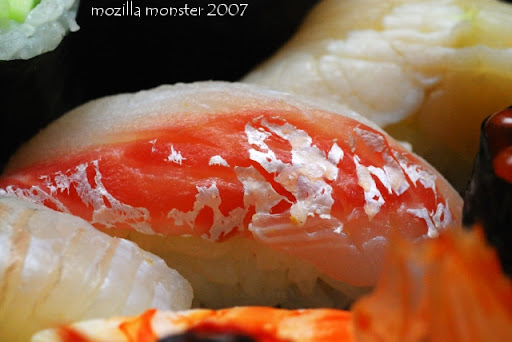
Sushi ! Part 1


Sushi ! Part 2


Sushi ! Part 3


No techie talk today still. More food pictures to share with you all ! More Tokyo food feasting, and this time, it's Sushi !

This is from my hotel - the only place that would let me take pictures of my food, unfortunately. But they're good, aren't they? At least they look delicious.

This one is for the ocipala one - Chen. She takes some of the best food pictures, and I hope to do as well someday. Still learning this thingy called photography.

And yes, Pelf, it's all taken using bounce flash.

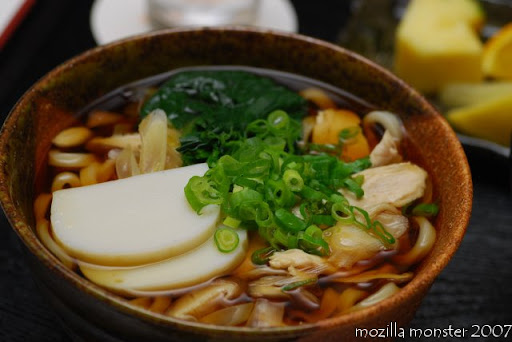
Tokyo: My room service


Hot Chicken Udon


Coca Cola

No technical data or talk. Just wanted to show you guys what bounce flash does to your photos.

Both pictures are taken with D80 with SB-600 flash bounced off the ceiling.

Flash is usually harsh because it comes from a small source, and is too bright, creating some really overblown highlights, and creating some harsh shadows.

Bouncing your flash means pointing it at another surface so that it will bounce off that surface. That will spread the light over a larger area, softening it and creates photos nicely lighted and with softer or even no shadows.

Actually, this is also for Winn and Angel. Here's your food photo.

Saturday, September 22, 2007

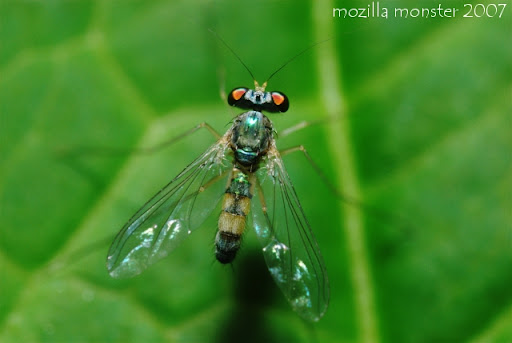
Macro: Yet another fly


Big Eyes

f/22, 1/60s, ISO 560, Diffused Flash, Tamron 90mm 1:1 Macro, D80

Not much to say here, expect that this is yet another fly I've managed to photograph. This is indeed becoming quite a good collection of insects.

I like how this turned out because it's quite rare to get a picture of the whole insect in focus. The Depth of Field (DOF) when taking macro shots is a matter of milimeters.

DOF refers to how much of the photo is in sharp focus. The rule is that the closer you are to a subject, the less of it is in focus. To get an entire insect in focus, you can do a few things.

The simple way is to use a narrower aperture (larger F-number). A narrower aperture puts more of the picture in focus, but increases the exposure time. Use at least f/8 - f/11 for your macro shots. In some cases, I've used f/64 !

Or you can get along the plane of the subject. What this really means is that you position your lens in such a way that it is at the same distance of the entire subject. That way, the whole subject is always within the same distance, thus its always in focus (or out of focus).

And from either my small garden of potted plants, or the few plants that grow along the fence in the backyard, this is turning out to be a pretty decent collection, I think.

Saturday, September 15, 2007

Macro: Metallic Fly


Shiny Fly 1

f/32, 1/60s, Bounced Flash, Tamron SP 90mm 1:1 Macro, D80


Shiny Fly 2

f/32, 1/60s, Bounced Flash, Tamron SP 90mm 1:1 Macro, D80

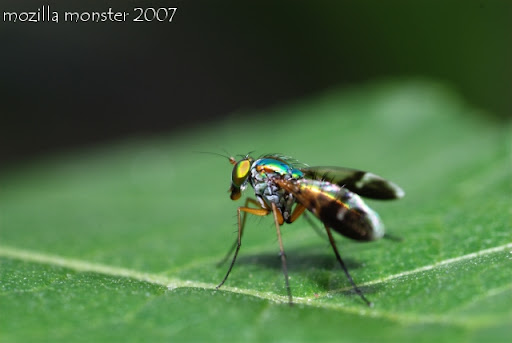
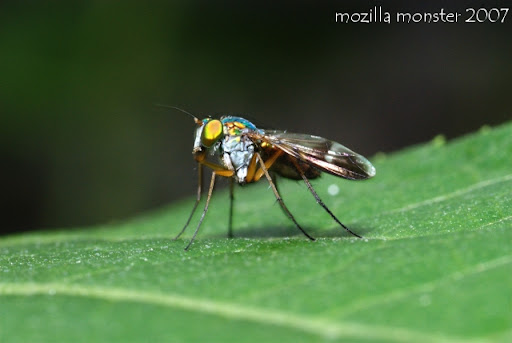
One of the joy of macro photography is in learning about the miniature world we're surrounded by, but not aware of.

This metallic fly is one such instance ! I have never seen any insect THAT shiny before, at least not in my backyard !

My new best friend once commented that flies are really difficult to photograph because they fly away before you can get close enough to snap a picture of them.

Well, there are ways around that.

All insects are less active early in the morning, which is about the best time to have them photographed. As the day goes on, they get more active. So, if insect's your thing - then go after them early in the day.

They also have a tendency of returning to the same spot. If you have the patience to wait, they will usually return. Be ready to snap a picture when they do !

Make sure you take care not to have your shadow cast on the insect. That is always the best way to alert the insect to your presence ! So, besides no sudden movement, make sure you also don't approach in such a way that your shadow gets in the way.

Using flash is also a great way to freeze your insect picture. On DSLRs, because your macro lens is usually quite long, the built in flash will most likely not work - there will be ugly shadows cast on your picture if you get close enough. Make sure you get an external flash, and use a diffuser to make sure you don't get over exposed photos.

Monday, September 3, 2007

Macro: Ready to pounce !


Ready to pounce !

f/16, 1/60s, Nikon D80, Tamron 90mm 1:1 macro

Patience is really a virtue. Remember this post ? Honestly, that wasn't the best spider photo I have ... it was the best I had then, but seriously, perhaps I shouldn't have posted that photo. Not all the comments I got was flattering for that photo, but hey, you learn from constructive criticism.

After many more tries, a lot of frustration, and a few important lessons learnt, I finally caught a spider picture that I think is acceptable.

This spider had been a resident in one of the orchids my dad has kept immaculately. One of the lessons I've learnt is to be really patient with spiders. When I first position my camera gear around the plant, it'll always try to hide. At first, I always got frustrated and tried to hurry my shots - the resulting pictures show my frustration, and add to it.

Nowadays, I setup my gear, then stay still for around 5 minutes, after which, the spider usually returns to its original position. During that 5 minutes, I make all the necessary adjustments so that when spidey returns, I am ready to snap away !
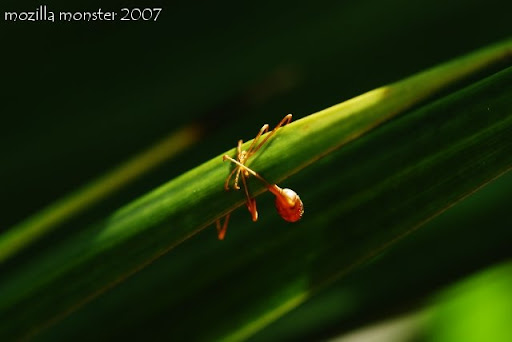
While this photo is satisfying, I'm sure I can still improve ... I realise that the hind legs could be in better focus. In this case, it wasn't in focus because I didn't use a smaller aperture, and also because I wasn't on plane with the spider. I'm sure in time to come, I'll get a really good picture of the spider !
Sunday, August 5, 2007

Macro: Er ... get a hotel room, guys !
I'm breaking away from convention ... instead of putting the photo first, I'll put it at the end of this posting. I've been patrolling my patch of long beans growing along my backyard fence, and there's been a variety of insects, of which you've already seen some on this blog. This one takes it to a whole different level, though.

All I can say is ... if you're under 18, and your guardian haven't had that talk about birds and bees and bettles with you yet, you ought to skip this entry. ;-)

I hereby give you .... the randy bettles ... scroll on to see it ...


(scroll on ...)


Mate ... !??!!
f/13 , 1/60s, Nikon D80, Tamron 90mm 1:1


Friday, August 3, 2007

Macro: Spider


Ready to Pounce
f/8, 1/60s, Diffused flash, D80, Tamron 90mm 1:1 SP

Spiders are some of the most interesting macro subjects, but they are also one of the most difficult to capture properly. Their ability to leap away means you can sometimes become extremely frustrated.

One trick I try, which works most of the time, is to stun them using the camera's flash. I hope I don't blind them permanently (and I'm pretty sure I don't), just enough to stun them into keeping still for a while.

All the same, it's important to use flash when photographing insects to ensure good lighting, and to also freeze the frame - it counters hand shake to some extent.

This is not the perfect picture of a spider by any means - you really have to get the eyes in focus. And of course, I didn't get close enough - I think it would be better to fill the frame more with the spider than with all that negative space.

Sunday, July 29, 2007

Macro: Red, red ribbon flowers


Gazing skywards

f/8, 1/400s, D80, Tamron 90mm 1:1, +0.3 EV


Sea of Red

f/3.2, 1/640s, Nikon D80, Tamron 90mm 1:1


Look At Me Bloom !
f/13, 1/60 sec, Nikon D80, Tamron 90mm 1:1

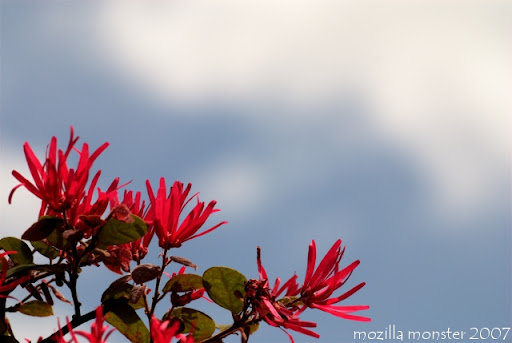
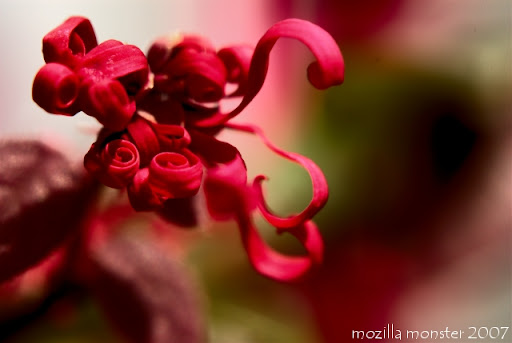
A sudden flowering spurt have hit all the plants in my garden, and while I'm happy with all the orchids, roses and hibiscus blooming, what really pleased me was the 'ribbon flowers' which rarely blooms, rendering the whole shrub in bursts of lively red.

Flowers are amazing in their ability to provide so much joy in such simplicity. And of course, there's a new subject to photograph.

The first picture, Gazing Skywards, shows the flowers against the sky, a common rendering of flowers that works well. When you have a mostly blue sky, and you have flowers that contrast well against that backdrop, this is a good shot. Just be careful not to get the exposures wrong - use the correct metering - making sure the flowers do not become underexposed against the brighter sky.

The second picture, Sea of Red, shows the shrub itself in full blooming glory. It's really nice to be able to use bokeh to render the background colorful, but not too distracting. To get the bokeh, I used the widest possible aperture, f/3.2. A narrower aperture gives greater depth of field, which renders less bokeh, by making the background more in focus.

And finally, Look At Me Bloom !, a macro of the flower itself. There are plenty of 'ribbon flowers' on the plant itself, so I took the time to find one that is beautiful and unique. Most of the other blooms are pretty, but this one had blooms in various stages - some are still coiled, some are semi open, and some have flared all the way out.

The thing about photographing flower is to take the time to choose the right bloom to be photographed. In a cluster of flowers, there will be one of two which is right for photographing - take the time to look for those.

Edit: The last picture, Look At Me Bloom !, is dedicated to my girlfriend. How appropriately, her life is also starting to bloom, now that she's started her working life. It's looking rosy.

Sunday, July 8, 2007

Hanging by a thread


Cocoon

f/8, 1/100s, Tamron 90mm 1:1 Macro, D80

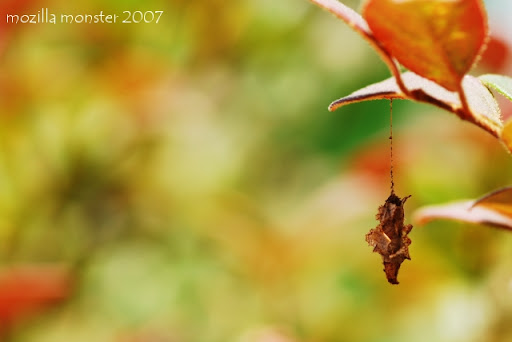
This picture of a cocoon is taken at my usual practice ground - my garden. I find it fascinating that such a small place with relatively few plant can still support so much life and diversity. I believe looking from these plants that we're meant to be diverse - like the copious different number of insects and bugs I find in such a small yard.

Used rule of 3rd here - meaning - instead of centering the picture, I placed the subject 1/3rd into the picture instead to create emphasis. Too often, we take pictures and we put our subject in the center. While I'm sure we all like our graduation photos that way, for additional impact, often, asymmetrical placement adds impact.

The background, which is out of focus, has a nice, blurry effect. This effect is called bokeh.

Bokeh refers to how out of focus areas are rendered, and is different depending on the lens you use. The better the lens, the "creamier" or smoother the bokeh is. Creamy bokeh creates a non-distracting backdrop so that you only concentrate on the subject. If I used my normal digital camera, most of the leafs and branches in the background would have been visible, and the picture would be much more distracting ...

Thursday, June 28, 2007

Macro: You ok, buddy ?


You ok, buddy ? Part 1
f/11, 1/200 s, Tamron 90mm 1:1 Macro, D80


You ok, buddy ? Part 2
f/11, 1/200 s, Tamron 90mm 1:1 Macro, D80

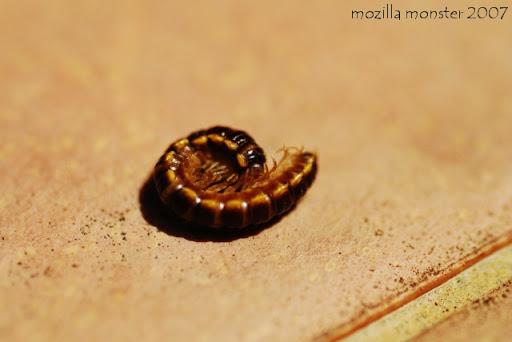
Worms like these are a common fixture in my garden, but they're rarely out in the open, usually found in dark spots, like under the pots, and in the top layer of the soil in pots with dark earth.

This one must have strayed out, and was all curled up in the hot sun.

While taking photos of the worm, this common black ant came about and started to check out the worm. The second photo almost made it look like the ant was asking the worm if it's ok, as if the ant's concerned.

But reality is, a few minutes after the photo was taken, a large contingent of black ants came and carried the worm away, presumably, to the anthill or nest.

If anyone can identify the worm (it might not even be a worm - look at all those legs, could be some sort of centipede or milipede), I'd be happy to hear from you !

Monday, June 18, 2007

Macro: My Orange World


My Orange World
1/60, f/16, Tamron 90mm 1:1 Macro, D80 Handheld

The beauty of macros is that you see textures and details not apparent to the naked eye. This photo, I figure, is one you either love, or you hate.

Taken outside my home, where we dry off mandarin orange peel, to be used as flavor enhancer in our red bean soup, a little jumping spider (? is it a jumping spider ?), is trying hard to escape my attentions, thus, I never captured a frontal picture of the spider.

The orange from the drying peel gives this picture almost an alien-like feel. And I'll bet a lot of you never thought a common house spider is so hairy when seen through a macro lens.

As in any macro shot, lighting is essential - you need flash to freeze the action, and to make up for the light that gets blocked off because your camera is usually positioned really close to the object, making the subject darker. *Addition* And because we're all humans and our hands shake. *End of Addition*

Tuesday, June 12, 2007

Macro: I ain't letting go


I Ain't Letting Go Part 1
f/16, 1/30s, Tamron 90mm 1:1 Macro, D80


I Ain't Letting Go Part 2

f/16, 1/30s, Tamron 90mm 1:1 Macro, D80

Someone, tell me what's happening with these ants ??!!!

Taken from my little garden. The nice colors are a result of photographing this during the evening, when the sun is not as harsh. The colors are nicer, not as prone to 'whiteouts', and best of all, it doesn't give you - the photographer - a sunburn as easily.

For this shot, I had to wait till the winds died down, because I chose to use a very small f-stop, f/16, in order to get the maximum Depth of Field. That meant the shutter speed would be slow, around 1/30, in this case. It would have been really easy to spoil the pictures if I used a much wider aperture, but got parts of the ant out of focus because of shallow DOF. *Addition* What this means is that the chance of a bad picture due to shaking hands, slightly moving leaves, etc is very high - because the shutter speed is quite slow.*end of addition*

I'm darn happy with the results.

BTW, the ants are hanging on to these leaves when my dad was trying to pluck some of them away - he hates to have ants on the plants in the garden. And yes, he hand plucks them, because he doesn't want to kill them - even at the cost of getting bitten.

Thursday, June 7, 2007

Macro: Spirals


Spiral

f/8, 1/200s, Tamron 90mm 1:1 Macro, Nikon D80 handheld

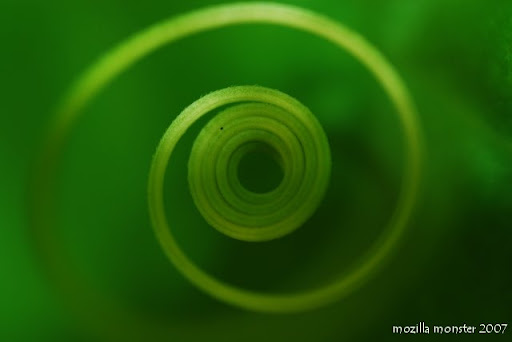
Well, in keeping with the green theme, here's another macro shot from my backyard.

It's a challenge trying to photograph little things like these, in usually bad light, and in unusual positions. I mean, you should have seen how I was crouching to take this picture. My mum asked me if I was alright and needed help. =P

I used the built in flash here, because my unnatural position means I was unable to properly support the camera - which means lots of blurry shots. The external flash explains the better lighted upper half of the picture, and the darker, less lighted lower half. There's no escaping the fact that I'll need external flash for get proper macro pictures.

Now, someone, try guess what's that I photographed !?